Upgrade Your Finish: Is a Paint Sprayer Gun Worth It?
If you are tired of brush marks, roller lines, and slow progress on big projects, a paint sprayer gun starts to look pretty good. Long stretches of siding, fences, and warehouse walls can feel endless with a roller. On top of that, roller lint and streaks can ruin what should be a clean, smooth finish.
A paint sprayer gun pushes paint through a hose and out a tip at high pressure or with air. Instead of dragging paint across the surface, you are laying down a fine spray. The feel and speed are very different from a brush or roller. Our goal here is simple: help contractors and serious DIYers decide when a sprayer is the right step up, when old-school tools are still better, and what to think about before you buy.
As we move into early fall, timing matters. Many crews are trying to wrap up exterior siding, decks, and commercial repaints before the Ohio cold settles in. A sprayer can help you close out those jobs faster, but only if it truly fits your work style and workload.
When Brushes and Rollers Still Make More Sense
Sprayers are not magic. There are many times when a brush or roller still wins.
Manual tools shine when you need control and detail, like:
- Tight cut-ins along ceilings and baseboards
- Small touch-ups and repairs
- Trim with lots of grooves or profiles
- Detailed cabinet doors and face frames
- Areas where you cannot mask much
On small projects, a paint sprayer gun can be overkill. If you only repaint one room every few years or handle small apartments one at a time, you may spend more time setting up, masking, and cleaning the sprayer than you save on actual painting.
There is also a learning curve. New spray users tend to struggle with:
- Too much paint on the surface and sagging
- Uneven coverage from moving too fast or too slow
- Overspray on glass, floors, or cars
- Wasted paint from poor gun distance or angle
If you work in occupied homes, hospitals, or offices, noise and ventilation also matter. Sprayers can be loud, and atomized paint mist lingers in the air. In tight or sensitive spaces, slower and quieter brushes and rollers often keep clients happier and surfaces cleaner.
How a Paint Sprayer Gun Can Transform Larger Jobs
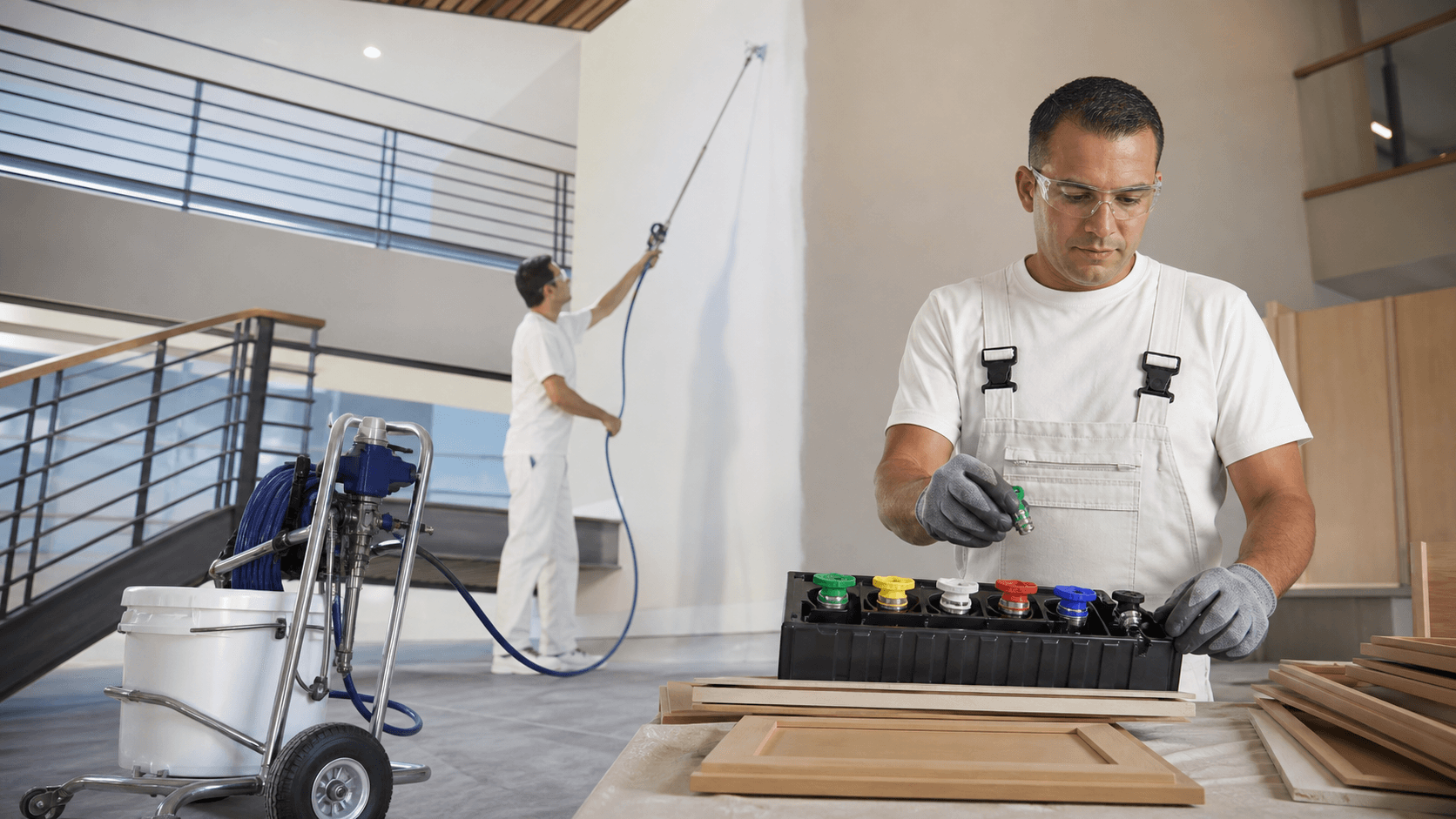
When the job gets big, a paint sprayer gun starts to earn its spot in the truck. Large exterior walls, garages, metal buildings, and multifamily units can move much faster when you spray.
On production work, a sprayer can help with:
- Exterior siding and trim
- Fences and decks
- Commercial interiors and corridors
- Warehouse walls and ceilings
- Turnaround work for rental units
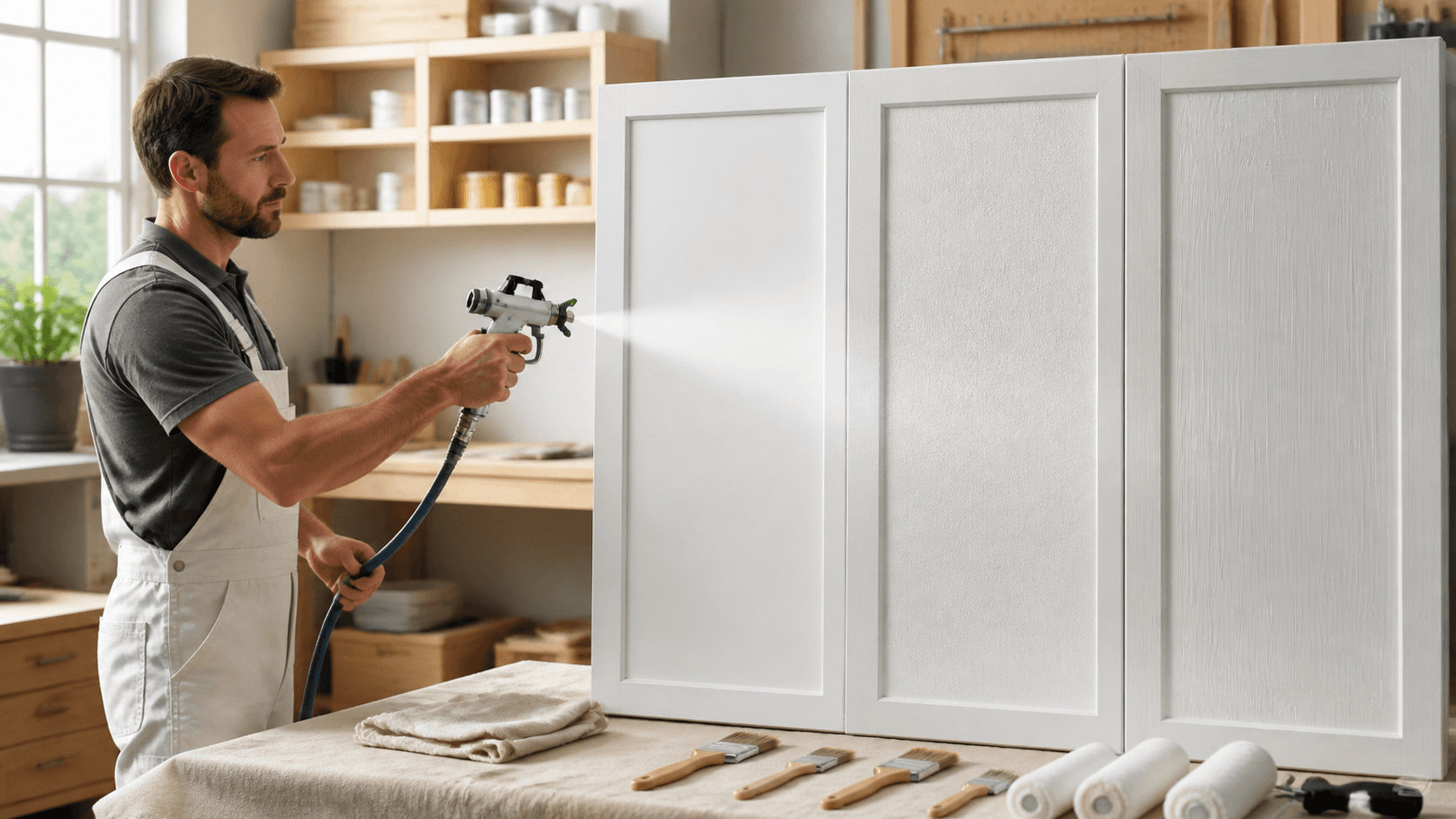
Finish quality is another big win. With the right setup and technique, a sprayer can lay down smooth, even coats on doors, cabinets, trim, and flat drywall. You avoid heavy roller texture and cut down on orange peel from thick coats.
Sprayers also reach places that are hard to coat with a brush or roller, like:
- Textured stucco and block
- Brick and rough masonry
- Popcorn or knockdown ceilings
- Railings, lattice, and metal fencing
- Complex steel or pipe work
For contractors, this can be a quiet edge over the competition: more jobs finished before cold weather hits, consistent results on repeat work, and happy clients who notice clean surfaces on doors, trim, and siding.
Comparing Tools for Real-World Projects
The right tool often depends on the type of job, not a simple brush vs sprayer fight.
Here is how we often see methods break down:
- Home exterior repaint: spray the big wall areas, then brush and roll trim and detail.
- Kitchen cabinets: HVLP sprayer on doors and drawer fronts, brush for tight touch-ups.
- Warehouse or shop: airless sprayer for speed on block or metal, minimal rolling.
- Decks and fences: spray for coverage, then back-roll or back-brush for penetration.
Hybrid workflows are common on pro crews. One person sprays wide open surfaces. Another person follows behind with a roller to push stain into porous materials or even out the sheen. A third handles fine cutting and detail.
That approach also helps with crew management. Adding one sprayer can:
- Remove bottlenecks on large walls and ceilings
- Free skilled painters to focus on high-visibility details
- Keep helpers productive with masking, back rolling, and cleanup
Material choice matters too. Many interior and exterior paints, stains, and primers spray well, but thicker coatings or textured products may need specific tips or may still be better with a roller. Always match the product label to the sprayer type, tip size, and pressure range you plan to use.
What to Know Before Buying Your First Paint Sprayer Gun
Before you pick up your first paint sprayer gun, it helps to understand the main types:
- Airless sprayers: great for high production and large surfaces.
- HVLP units: better for fine finishing on cabinets, doors, and trim.
- Handheld sprayers: useful for smaller projects and quick jobs.
Power, tips, and pressure all affect your results. Tip size and fan width need to match the coating and surface. Too large a tip and you waste paint, create runs, and blow through material. Too small and you fight slow coverage and poor atomization. Adjustable pressure helps you tune the spray for different paints and stains.
Ownership also includes more than just the main unit. You will need:
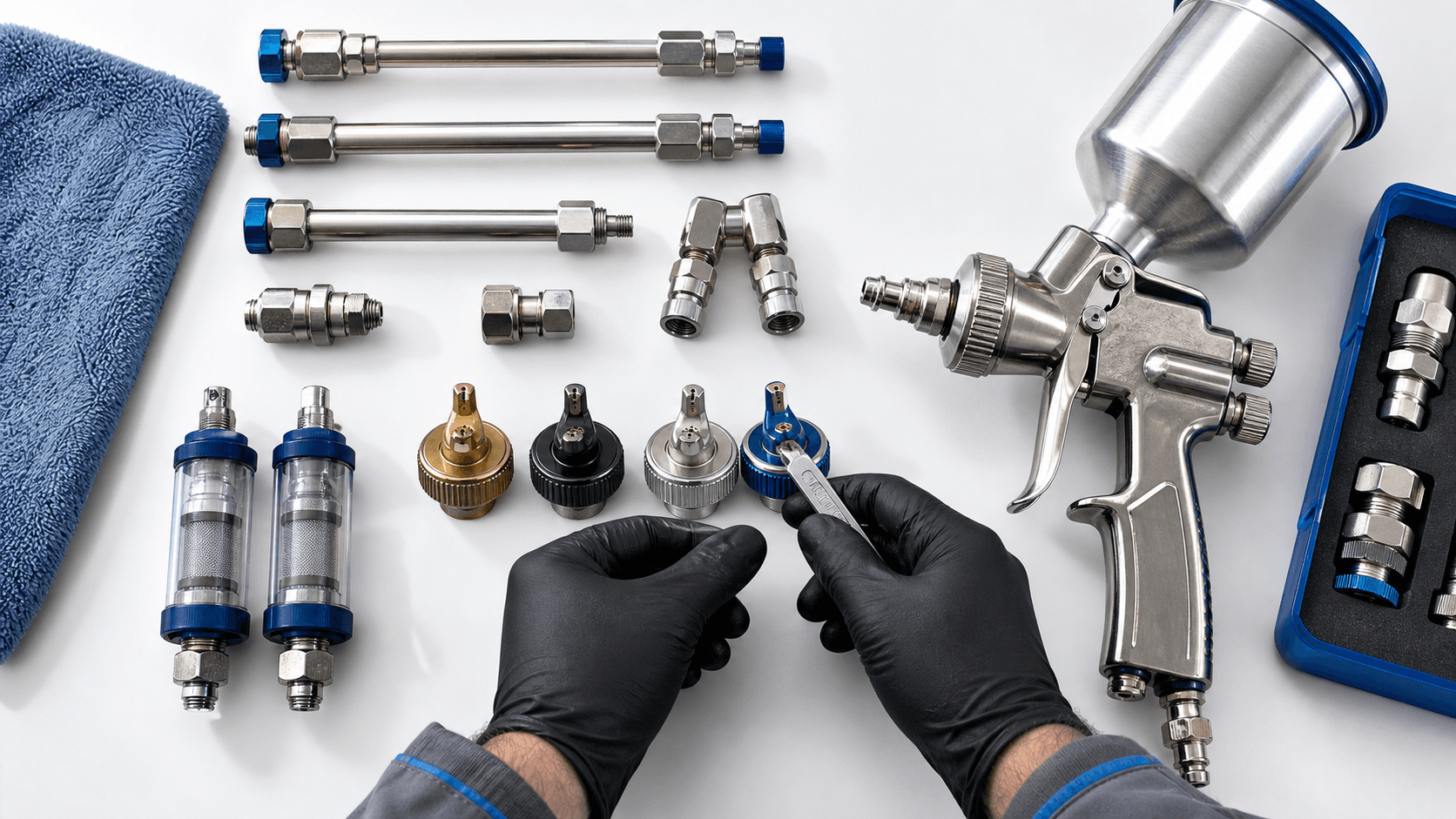
- Extra tips and tip guards
- Filters and strainers
- Quality hoses and possible extension poles
- Safety gear like respirators and eye protection
If you spray often, a professional-grade sprayer from a supplier that carries trusted brands, replacement parts, and accessories can pay off in reliability and less downtime over many seasons.
Maintenance, Overspray, Safety, and Timing Your Upgrade
A paint sprayer gun only works as well as it is cleaned and cared for. After each use, you should flush the lines, gun, and filters according to the coating type. Water-based products rinse with water. Solvent-based coatings need proper cleaning fluids. Skip this step, and you can damage seals, clog lines, and shorten pump life.
Overspray control is also part of every job. Plan for:
- Masking windows, fixtures, and trim
- Covering floors, roofs, and landscaping
- Watching wind and weather, especially in early fall
- Shielding vehicles, neighboring homes, and walkways
Safety is non-negotiable. Use a respirator rated for paint mist, eye and hearing protection, coveralls, and gloves. Handle hoses carefully and follow all instructions to avoid injection injuries from high-pressure spray.
As seasons turn colder, storage and winterization matter too. Pumps, guns, and hoses should be protected from freezing temperatures and long stretches of downtime. Proper storage fluid, careful cleaning, and a dry spot in the shop can keep your sprayer ready for the next busy season.
So is now the right time to upgrade? Think about how often you paint, how large your projects are, how often you rent sprayers, and how much schedule pressure you feel on big exteriors and commercial work. Many pros and serious DIYers start with one sprayer, a clear list of projects, and a simple set of tips and accessories, then build out a full system once they see how spraying fits their work.
Get Started With Your Project Today
If you are ready to achieve a smoother, more professional finish, explore our curated selection and find the right paint sprayer gun for your next job. At Integrity Supply, we focus on reliable products that help you work faster without sacrificing quality. If you need guidance before you buy, you can contact us for personalized support.
John Colavecchio is the President and CEO of Integrity Supply, an Ohio-based supplier of painting, safety, hardware, tools, and construction-related products. With Integrity Supply founded in 2000 and serving contractors, painters, and trade professionals for more than two decades, John brings practical industry knowledge to articles covering paint supplies, spray equipment, job-site tools, and professional product selection. His content is written to help contractors and serious DIY customers choose the right products, avoid common project mistakes, and get better results from trusted industry brands.