Fasteners can look small, but they do a big job. When rain, frost, road salt, coastal air, and damp lumber enter the picture, the wrong screw or bolt can lose strength long before the rest of the project wears out. We recommend choosing hardware and building materials based on where they will live, what they will touch, and how much stress they must handle.
Fall is a smart time to look closely at exterior connections. Cold, wet weather can expose weak coatings, damaged screw heads, and poor material matches that were easy to miss during dry months.
Stop Rust Before It Starts on Fall and Winter Jobs
Corrosion is more than a cosmetic issue. A rusty fastener can stain siding, loosen a gate hinge, weaken a deck connection, or create a path for water behind exterior trim. Once moisture reaches bare steel, corrosion can continue spreading beneath a finish or coating.
We often suggest looking for early warning signs before winter conditions make them worse:
- Red rust on screws, bolts, brackets, or anchors
- White oxidation on galvanized or zinc-coated hardware
- Rust streaks on siding, decking, masonry, or trim
- Loose connections, cracked finishes, or deteriorating screw heads
The lowest-cost screw may seem fine at installation, but it can create bigger problems when it fails under wet conditions. Leaks, movement in an assembly, damaged finishes, and replacement labor often begin with a fastener that was never meant for the exposure.
Before ordering, we encourage you to consider the metal type, coating, nearby materials, fastener design, load requirements, and installation conditions. A fastener is only reliable if it can keep its holding power over time.
Match Fastener Metals to the Exposure
The jobsite environment should guide your metal choice. Zinc-plated steel can work well in dry, protected indoor locations, such as interior hardware or building materials applications that will not see regular moisture. It is not the same thing as an exterior-rated fastener.
For decks, fences, exterior framing, roofing details, and damp treated lumber, we recommend stepping up to a finish or metal made for tougher exposure. Common choices include:
- Zinc-plated steel for dry indoor work
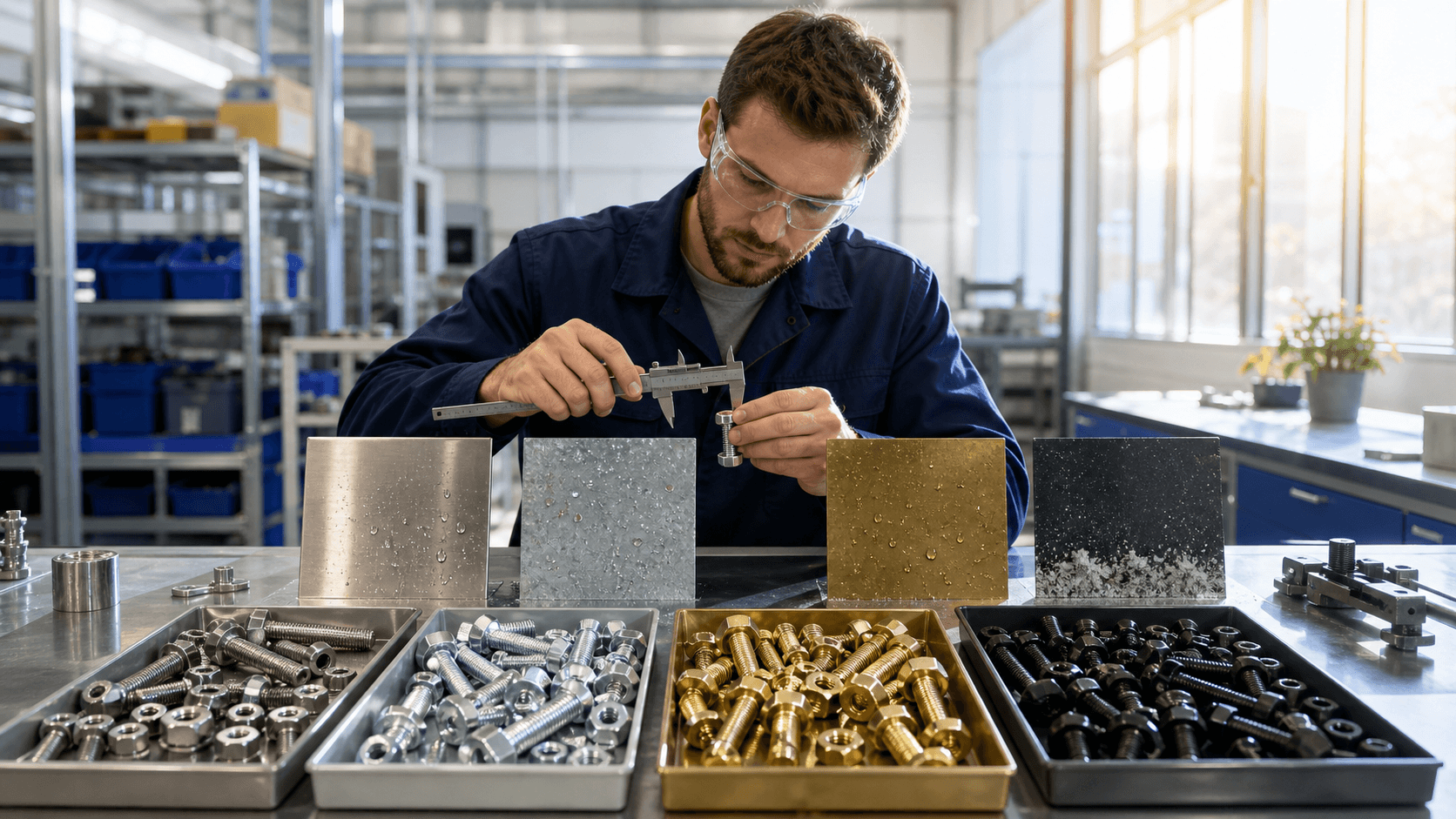
- Hot-dip galvanized fasteners for many exterior wood and treated-lumber projects
- Type 304 stainless steel for many exterior installations
- Type 316 stainless steel for coastal, industrial, and chloride-heavy conditions
Hot-dip galvanized fasteners have a thicker zinc coating than standard electro-zinc hardware. That additional protection makes them a practical choice for many outdoor wood connections. Stainless steel offers long-term resistance where moisture, salt, or appearance are major concerns.
Not all stainless fasteners are alike. Type 304 stainless is dependable for many exterior uses, while Type 316 stainless offers improved resistance in salt-heavy or chloride-heavy areas. We recommend confirming the product specifications instead of assuming that any package marked "stainless" is right for every outdoor job.
Choose Coatings That Survive Moisture and Chemicals
Coatings help carbon-steel screws, bolts, anchors, and hardware last longer, but their performance depends on more than color. Thickness, adhesion, full coverage, and resistance to abrasion all matter. A coating that gets scraped during installation can expose the base metal underneath.
Electro-zinc plating is generally best for protected indoor applications. Hot-dip galvanizing provides stronger outdoor protection, while mechanically galvanized finishes, ceramic coatings, and proprietary polymer coatings may be made for certain construction uses. Coated deck screws can be a solid option when the manufacturer rates them for the lumber treatment and exposure level involved.
Chemical exposure deserves special attention. Modern pressure-treated lumber, fertilizers, cleaning products, pool chemicals, and deicing salts can all be hard on metal. Fasteners installed in treated lumber should be approved for that lumber treatment. Incompatible metals and coatings can corrode much faster than expected.
Package ratings and manufacturer compatibility charts can help prevent a poor match. A coating that works on a covered porch may not hold up on a wet deck, retaining wall, exterior stair assembly, or salt-exposed structure.
Prevent Galvanic Corrosion at Material Joints
Galvanic corrosion happens when different metals touch and moisture completes the connection between them. One metal can then corrode faster than it would on its own. Exterior joints are especially vulnerable because water can get into a tight space and remain there.
This is not only a fastener issue. We recommend reviewing the full assembly, including the screw, bracket, flashing, connector, substrate, coatings, and water-management details. A stainless screw may be appropriate for one part of a project, yet the surrounding aluminum trim, copper flashing, galvanized bracket, or treated lumber may still need careful review.
Wet, salty, and industrial conditions can speed up galvanic activity. To help reduce the risk, compatible materials and separation methods may be needed:
- Use fasteners suited to the connected metals
- Add isolation washers or nonconductive barriers where appropriate
- Use sealants and flashing details that limit trapped moisture
- Keep water moving away from joints instead of allowing it to collect
Hidden corrosion can be one of the most frustrating problems because it may grow behind trim, under decking, or inside a connection before anyone sees it. Planning the entire material combination from the start helps protect both safety and finishes.
Specify Screws by Load, Thread, and Installation
Corrosion resistance does not replace proper fastener design. The screw must still provide the right holding power, shear strength, thread engagement, head style, and drive type for the materials being joined.
Coarse threads are commonly selected for wood, while fine threads are used for metal framing. Self-drilling points are made for steel applications, and approved structural screws are the right category for load-bearing connections. Drywall screws may appear convenient, but they are not designed for exterior or structural use.
Installation also affects service life. The correct driver bit, proper alignment, and controlled driving pressure help prevent stripped heads and damaged coatings. Predrilling may be needed for certain materials or larger fasteners. When a coating is scraped or a fastener is overdriven, moisture can reach exposed metal and shorten its life.
Late October is a practical time to inspect outdoor hardware before cold, wet weather settles in. We recommend replacing visibly rusted fasteners and stocking the right supplies for exterior trim, deck repairs, gates, fencing, roofing details, and equipment maintenance.
Build a Corrosion-Resistant Fastener List Today
A project-specific list makes ordering simpler and helps prevent last-minute substitutions. Include the exposure conditions, substrate materials, required load, coating or stainless grade, treated-lumber compatibility, nearby metals, and the installation tools needed for the work.
The right fastener protects more than one connection. It supports cleaner finishes, better water resistance, lower maintenance needs, and a safer build that can stand up to the seasons ahead.
Get The Right Fasteners For The Job
At Integrity Supply, we help contractors and serious DIYers select products that match the demands of each application. Browse our hardware and building materials for dependable fasteners and jobsite essentials. If you need help comparing options for your project, contact us for practical product guidance.