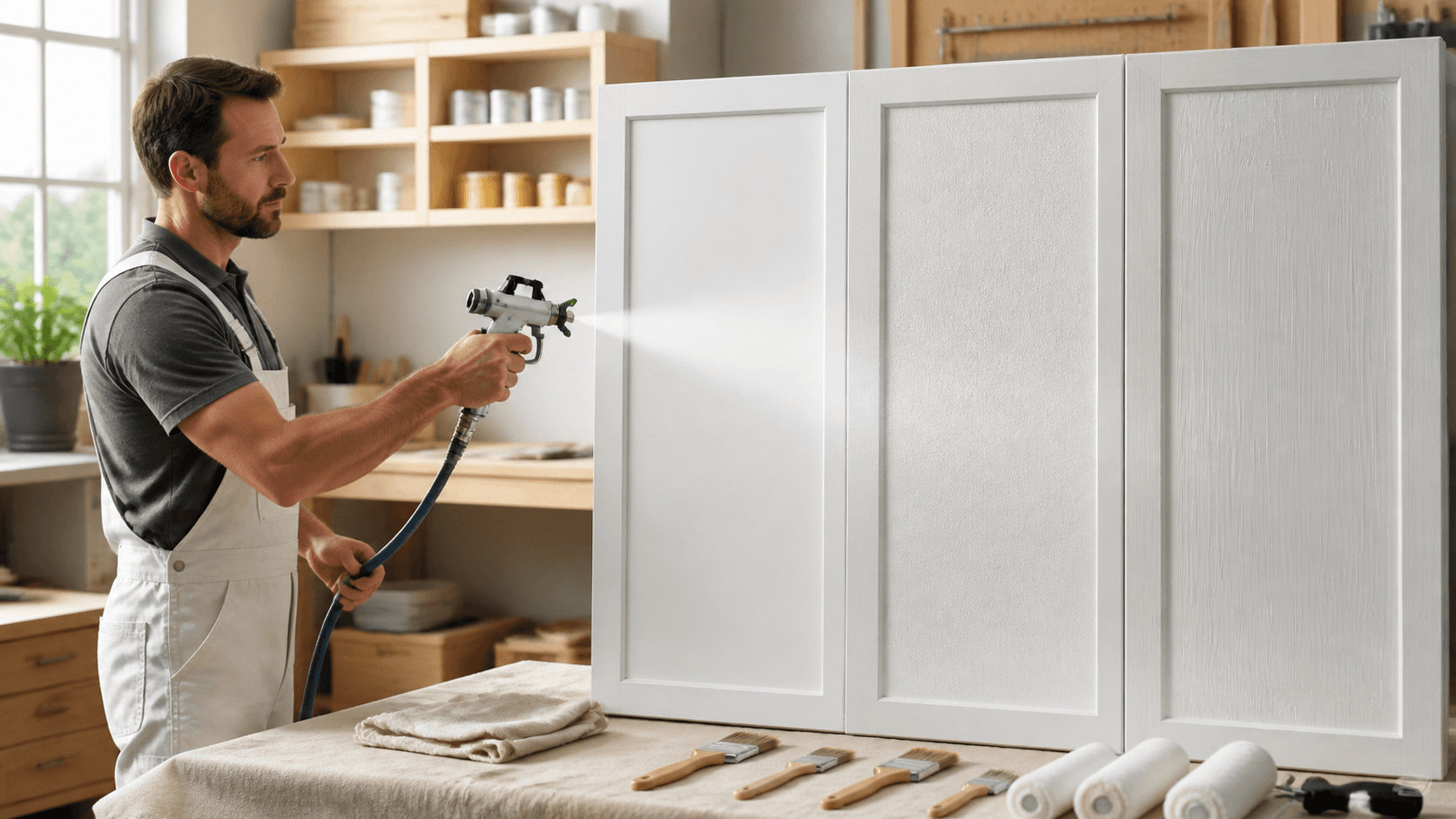
Summer is when exterior painting, deck restoration, siding work, and light commercial jobs all pile up at once. Heat, long days, and tight schedules mean every hour and every pass of the gun counts. Choosing the right paint sprayer equipment is one of the fastest ways to cut labor time, get a smoother finish, and keep callbacks from eating into your profits. When the sun is beating on siding or concrete, the wrong setup can flash-dry paint, slow you down, and push your crew to the limit.
At Integrity Supply, we see the same mistake over and over: picking a sprayer by price tag or by whatever brand feels familiar. There is a much better way. In this article, we will walk through how to start from the work you actually do, compare the specs that matter, factor in job site realities, and look at long-term durability and workflow so you can match paint sprayer equipment to real summer projects, not just a catalog page.
Make Summer Work Easier with the Right Sprayer
Summer is peak season for:
- Exterior repaints and new color schemes
- Decks, fences, and pergolas
- Multi-unit touchups and turns
- Light commercial exteriors and interiors
With temperatures rising, coatings skin over faster, crews tire sooner, and production bottlenecks show up quickly. The right sprayer can push thicker coatings without straining, lay down even coverage in fewer passes, and handle longer hose runs so you are not dragging equipment everywhere.
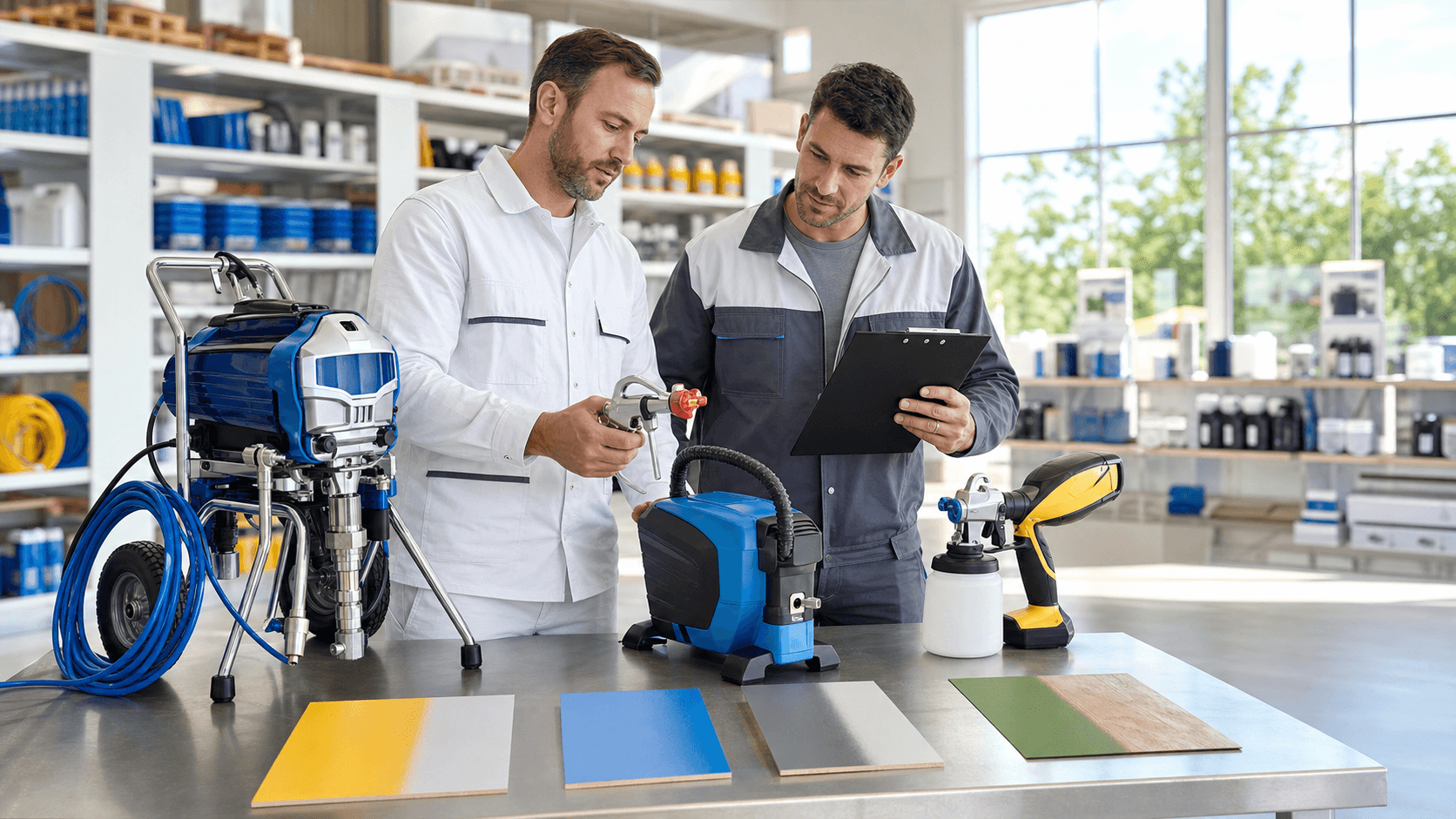
The key is to compare paint sprayer equipment in a structured way, not just by horsepower or a sales blurb. The goal is to define what you spray, how often you spray, and where you spray, and then match features, power, and durability to that profile.
Start with the Job, Not the Machine
Before we talk about models or brands, we start with your workload. Different projects demand different setups, so it helps to sort typical jobs into rough categories:
- Small residential interiors and exteriors
- Large exterior repaints and full-house color changes
- Commercial interiors with long runs and repetitive spaces
- Fences, decks, and railings
- Metal or industrial surfaces and specialty coatings
- Multi-unit or property management work with frequent turns
From there, answer a few key questions about what you spray, how often you spray, and what kinds of surfaces and access issues you deal with (like tall exteriors, tight interiors, or occupied buildings). Those answers drive your output needs (so you know how many gallons per minute you really need), your hose length requirements for multi-story work or long hallways, and the tip sizes you will rely on, especially for thicker elastomerics or heavy primers. They also guide the type of system that makes sense, whether that is airless for production walls and siding, HVLP for fine finish work, or specialty rigs for industrial coatings.
Getting honest about your job mix keeps you from buying a heavy-duty machine that only makes sense a few times a year, or a light unit that burns out or lags behind your crew by mid-season.
Compare Core Performance Specs That Matter
Once the work profile is clear, you can start comparing real performance specs across paint sprayer equipment. Key numbers to look at:
- Maximum tip size: This must match your thickest planned coating. If you plan to run heavy acrylics, elastomerics, or block fillers, you need a unit that can support the larger tip sizes those coatings require.
- Gallons per minute (GPM): GPM is a good indicator of how fast you can realistically produce, especially on big exteriors and commercial interiors. A higher GPM sprayer moves more material, but it is not always the best choice for detail work.
- Maximum pressure and working pressure: High max pressure is good, but what matters more is consistent operating pressure under load so your fan pattern does not collapse partway through a long pull.
Hose length ratings are another big one for summer work because they determine whether your crew can keep spraying efficiently without constantly repositioning the unit. In practice, hose length needs often show up in situations like:
- Ladder work and multi-story exteriors
- Long runs across commercial spaces
- Working around landscaping, pools, or scaffolding
If the sprayer cannot support the hose length you actually need, you will spend more time moving the machine than spraying.
Duty cycle and recommended annual usage help tell you whether a unit is aimed at daily contractor use or more occasional DIY work. For contractors and serious DIY users who spray often, undersizing here usually leads to lost time and higher repair costs.
Balance is important as you compare options. More power and more GPM are not always better, and if a lot of your work is trim, doors, and occupied interiors, a slightly smaller machine with better control and easier fine adjustments can save time and rework.
Evaluate Power Sources, Portability, and Job Site Reality
Power source and portability often decide how pleasant or painful summer spraying will feel. Common choices include:
- Electric sprayers: Great for residential interiors and exteriors with reliable power nearby. They run quieter and avoid exhaust fumes in closed spaces.
- Gas sprayers: Useful for large exteriors, new construction, and remote jobs where power is limited. They shine on big production days but are heavier and louder.
- Cordless sprayers: Handy for quick touchups, punch lists, and small repairs when it is not worth setting up a full rig.
Beyond the power source, portability details matter more than they seem on paper. Cart vs. stand designs, overall weight and balance, integrated hose and gun storage, and wheel quality can all affect how fast you can move and set up, especially when you are loading in and out of a truck all day or rolling across rough yards and uneven driveways.
Summer adds a few extra considerations as well:
- Keeping pumps and motors out of direct sun as much as possible
- Using extension cords correctly on damp grass or around water features
- Managing gas and fuel storage safely in high temperatures
Before you commit to a bigger, heavier, higher-output rig, walk through your most common sites in your mind. If you regularly deal with narrow gates, tight hallways, or long uphill drives, a lighter, more portable setup may save more time than raw output ever will.
Look Beyond Specs: Durability, Service, and Total Cost
Two sprayers might look similar on paper, but not all are built the same. Long-term value depends heavily on durability and service support.
Some durability indicators to compare include:
- Pump type: Piston pumps are often preferred for higher production and can usually be rebuilt. Diaphragm pumps may suit lighter or intermittent use.
- Fluid section materials and seals: If you spray aggressive or high-solids coatings, pay attention to whether the materials are designed to stand up to them.
- Maintenance and cleaning: Easy access to filters, clear flushing steps, and straightforward cleaning make it more likely your crew will actually maintain the unit.
Serviceability can be the difference between a quick turnaround and losing several days in peak season. That is why it is worth checking:
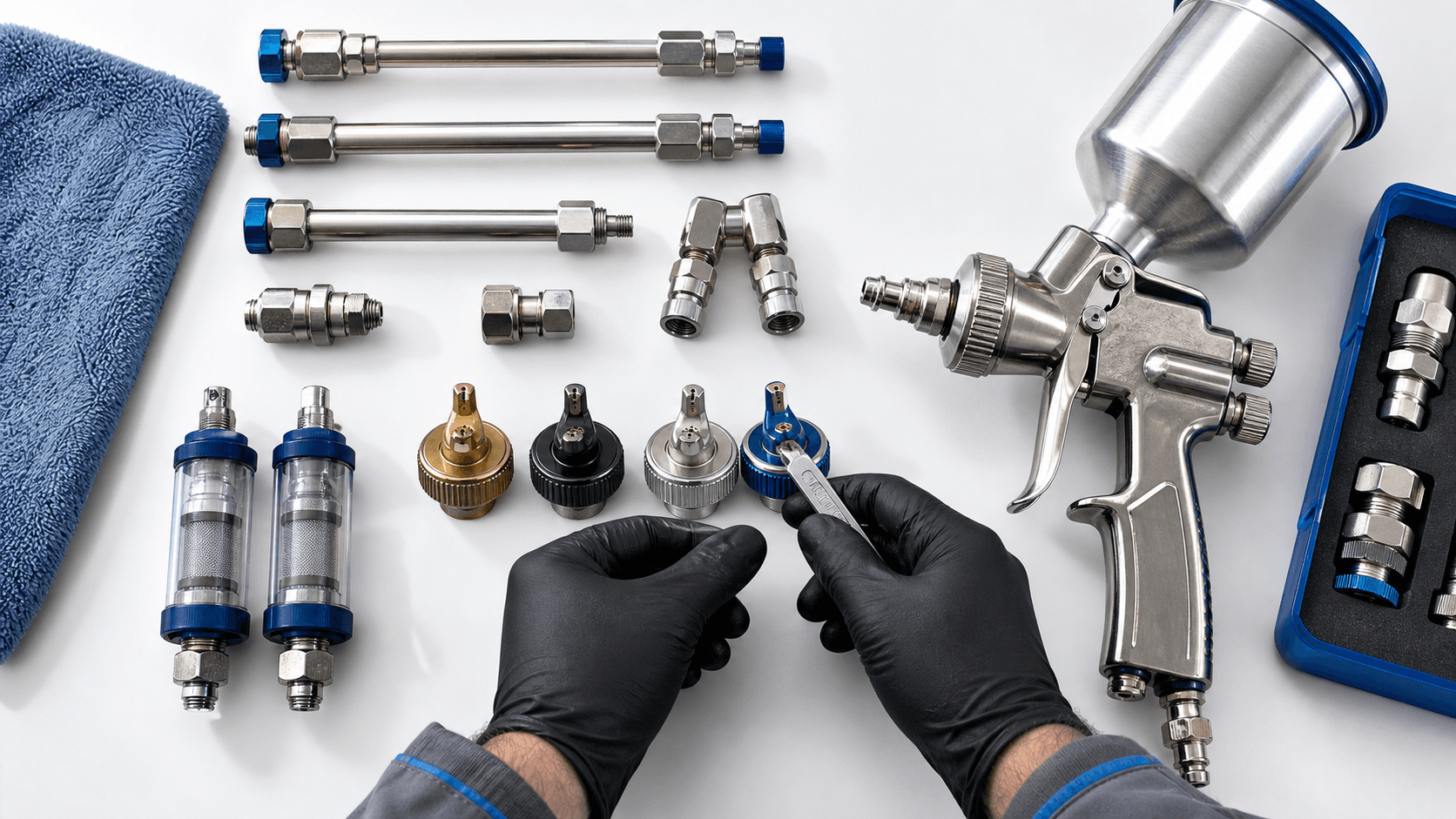
- Availability of replacement tips, filters, hoses, and maintenance kits
- Access to technical support or service centers
- How quickly a trusted supplier can get you downtime-critical parts
Total cost of ownership goes beyond the initial invoice. It includes expected lifespan based on your usage pattern, the cost and frequency of pump rebuilds and maintenance kits, tip wear over time (especially when spraying abrasive or high-solids coatings), and the cost of failure in the middle of a packed summer schedule. Cheaper upfront often means you pay later in repairs, lost productivity, or both.
Match Features to Your Crew, Safety, and Workflow
Finally, compare how each piece of paint sprayer equipment fits the way your crew actually works. User-friendly controls and interfaces help a lot, especially when you are training new people fast and trying to keep production steady:
- Clear pressure adjustment and readable gauges or digital displays
- Consistent startup and shutdown procedures that are easy to train
- Smart controls or presets where available that keep new crew members from over-spraying everything in sight
Guns and tips also matter more than many people think. Ergonomics and the right setup reduce fatigue and improve consistency:
- Ergonomic gun design and reasonable trigger pull reduce fatigue on long days
- Quality tip guards and reversible tips make clearing clogs faster
- Matching fan widths and orifice sizes to your coatings and surfaces gives you better control and less overspray
Safety should always be part of your comparison:
- Respirators suitable for the coatings you spray
- Eye protection that crews will actually wear
- Gloves with enough dexterity to handle guns, tips, and adjustments
- Proper extensions for soffits, high trim, and ceilings so people are not stretching from ladders
Workflow add-ons can also make a meaningful difference on busy summer schedules:
- Extra guns for two-operator setups on big exteriors
- Whip hoses for better control at the gun, especially for trim work
- Extensions matched to your most common heights
- Filter setups tailored to the coatings and tip sizes you rely on
Turning all of this into a confident decision comes down to a simple habit: define your projects and coatings, decide how often you spray, compare the core specs that actually matter, verify durability and support, then consider usability and workflow for your crew. When you compare paint sprayer equipment through that lens, you are far more likely to end up with a setup that carries you smoothly through the hottest, busiest weeks of the year.
Get Started With Your Project Today
Explore our curated selection of paint sprayer equipment to find the right fit for your next job. At Integrity Supply, we focus on reliable tools that help you work faster and more efficiently. If you have questions about choosing the right setup, you can contact us for guidance tailored to your project.