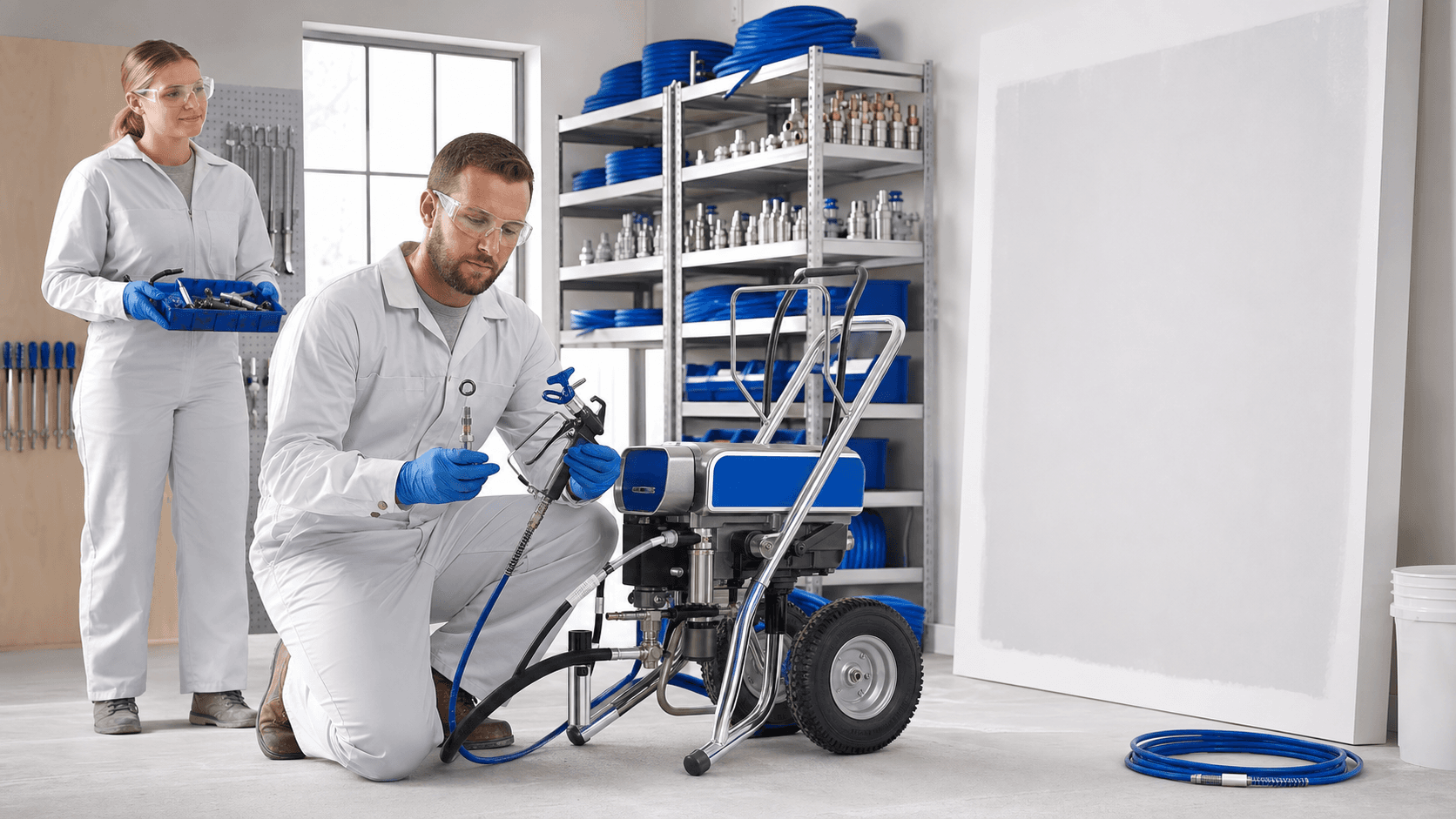
Early June comes fast. By the time the days hit full sun, outdoor job demands start to pick up. Crews that wait until the last minute to check their gear often lose time fixing issues that could have been handled earlier. If you are working with a Graco paint sprayer airless, it is smart to give your equipment a full look before jumping into heavier jobs. As a wholesale distributor based in Willoughby Hills, Ohio, we supply professional painting, safety, and construction products from leading manufacturers to contractors and businesses across the United States, so we see how important pre-season checks are for busy crews.
An airless sprayer can save time and give smoother coverage on big surfaces, but only if it is ready. Whether the machine is fresh off the shelf or has been used heavily last season, checking specific parts can help avoid setbacks. Small things, like a clogged tip or shaky pressure, throw off the whole project. We work with trusted brands that back up their tools with parts support and consistent quality. That is especially helpful when summer jobs roll in fast and hard.
Signs Your Sprayer Is Ready for Summer Jobs
Sprayers take a beating over time. Even if they ran fine last season, that does not mean they are ready today. A quick inspection before the height of summer can flag trouble early.
Look over each part and check for small problems that often go unnoticed:
- Hoses bend and lose integrity around the connectors. Check for soft spots, kinks, or leaks near the ends.
- Tips can clog with old material, especially if not fully cleaned out after the last use. A partially blocked tip will not spray evenly.
- Triggers and guns should feel smooth and stable under pressure. If there is a delay when pulling the trigger or it feels sluggish, the internal components might need to be cleaned or replaced.
- Filters are easy to miss but can affect spray quality. A dirty filter restricts paint flow and leads to uneven lines. A new season calls for fresh ones.
- Tighten all connections. Loose fittings or worn seals can leak under pressure. That might start small but grows quickly into a mess.
Carving out time for a walk-through now saves you from downtime when the calendar is packed.
Understanding Controls and Pressure Settings
Mistakes often come from poor setup, not from bad gear. We have seen crews misjudge surface or material needs and end up fighting with the sprayer. Graco units are built to offer control, but every setting still needs a quick review.
Pressure settings matter more than most expect. Depending on your sprayer, there may be digital readouts or manual adjustment dials. Either way, make sure your team knows how to spot:
- What pressure each surface calls for, from siding and fencing to drywall
- How higher pressure affects coverage versus overspray risk
- Where the limit is so you do not blow out the finish or waste product
Before any job kicks off, it is worth walking your crew through a test run. See how the sprayer performs with various settings using leftover material. Practicing adjustments on a test surface means fewer issues once you are working under a deadline.
Why Flow Rate and Tip Size Matter
Paint is not one size fits all. Every coating has its own behavior, which is why choosing the right flow and tip is such an important part of the job. The logic is simple: thin coatings need less flow and smaller tips. Heavier coatings demand higher flow and wider tips.
Here is how tip size ties into the job:
- Small tips are better for interior trim, railings, and lower-viscosity coatings.
- Larger tips work with thicker products like heavy primers or elastomerics.
- Uneven or bumpy finishes often trace back to mismatched tips and material.
When the sprayer is not matched to the paint type, the job slows down. There is more clogging, more clean-up, and more guesswork. Review the manufacturer's specs for the coating you plan to use and select the tip and flow settings to suit that. It is one more step at the start, but it saves hours later.
How Graco and Titan Fit Into Team-Based Workflows
We work with both Graco and Titan because they have proven themselves on job sites many times. Both lines offer what crews want, durability and reliable repairs when needed, not just the sprayer but everything around it.
These brands hit the mark when it comes to team operations:
- Parts like filters, tips, and hoses are easy to find and swap out.
- Components often work across different machines, which helps standardize gear across crew sizes.
- Training new people is easier when equipment from the same brand shares functions and controls.
Whether a job is in full swing or just starting, having machines that fit into familiar routines means less explaining and fewer mistakes. Graco and Titan support that in ways that help keep jobs running smoothly, which is why they show up on site frequently. Our catalog includes a wide range of Graco airless sprayer parts and accessories, such as hoses, tips, filters, extension poles, repair kits, and storage cases that support these workflows.
Partnering With Suppliers That Offer Long-Term Support
Getting the right sprayer is one thing. Making sure that sprayer stays working is another. That is where good supplier choices matter.
Suppliers play a more significant role than just delivering a box. When they carry a full set of compatible parts and accessories, it makes ordering far simpler. That means less guessing, faster replacements, and fewer work stoppages because someone ordered the wrong item.
Standardizing gear also helps with growing teams. If everyone is trained on the same product lines, adjustments are easier. Bringing in new hires? They learn faster. Rotate people across sites? Workflow stays on track.
When that kind of support is steady, your crew spends less time on the phone and more time finishing projects.
Keep the Work Moving This Summer
Small checks now make all the difference later. Whether you are switching between coatings or cycling through different teams, it pays to get ahead of problems before job volume picks up.
Look over tips, hoses, fittings, and flow settings. Practice pressure adjustments and get your crew comfortable with the controls and parts. Brands like Graco and Titan offer more consistency through their design and support, which helps keep everything on schedule during your busiest weeks.
Do not wait for the summer backlog to catch up to you. Clean tools, smart setup, and familiar equipment help move jobs from start to finish without the stress. Planning now means less scrambling once the real heat hits.
Your team's equipment checklist may include replacing parts or upgrading gear, and we are here to help guide you with trusted brands engineered for heavy-duty work and reliable compatibility across job types. Our expert team is ready to help your crew fine-tune spray techniques and set up multiple jobs without interruption, keeping schedules on track. To explore more options and maximize your current setup, check out our selection of graco paint sprayer airless equipment, and for further assistance, contact Integrity Supply.